

Communities We Serve Across Central Indiana
Nine communities across four counties, each one written up the same way: what it costs, what it is like to live there, and what it does not do well. Start with the town you are considering, or with the county that fits your commute.
An index, not a ranking
Most pages that list Indianapolis suburbs are ranking them. This one is not. A ranking is only useful if everyone reading it wants the same thing, and nobody moving to Central Indiana does. The family optimising for a school corporation, the buyer optimising for a fifteen-minute commute, and the buyer optimising for a new build under a certain price are three different searches that end in three different towns.
So this page is an index. Each community below has its own guide, written to the same structure, so you can put two towns side by side and compare like for like instead of reading two sales pitches. Every figure in every guide carries a named source and a date.
If you already know the town, jump straight to it in the guides. If you are still orienting, read the four counties first — in this metro, the county usually narrows the search faster than the town does.
The four counties, and what each one tends to mean
Central Indiana is easier to search by county than by town, because the counties differ in the ways buyers care about — price per square foot, how much new construction is running, school corporation boundaries, and which highway carries the commute. These are tendencies rather than rules, and every guide gets specific for its own town.
Marion County — the centre
Indianapolis itself, 887,642 residents at the 2020 Census (U.S. Census Bureau). Widest range of housing and price on this list, the only genuinely walkable neighbourhoods, and eleven separate school districts inside one county line, which is why an address matters more here than a town name.
Hamilton County — north
Fishers, Noblesville and Westfield. The most new construction at scale and, generally, the highest prices in the service area. The I-69 and SR-37 corridors carry the commute, and both of them are worth driving at the hour you would leave before you commit.
Hancock County — east
Greenfield, New Palestine, McCordsville and Fortville. Smaller towns, generally more house per dollar than the north side, and the corner of the metro Jim lives and works in. US-52 and I-70 carry most of the commuting.
Johnson County — south
Greenwood. The south-metro anchor, closest to the I-65 corridor, and the option most often missed by buyers who start their search on the north side out of habit.
Nine communities, covered guide by guide
Each one is a long read rather than a listings page. They are ordered here from the centre outward, not best to worst. Every town has a guide, the homes currently for sale, and a market report that keeps itself current.
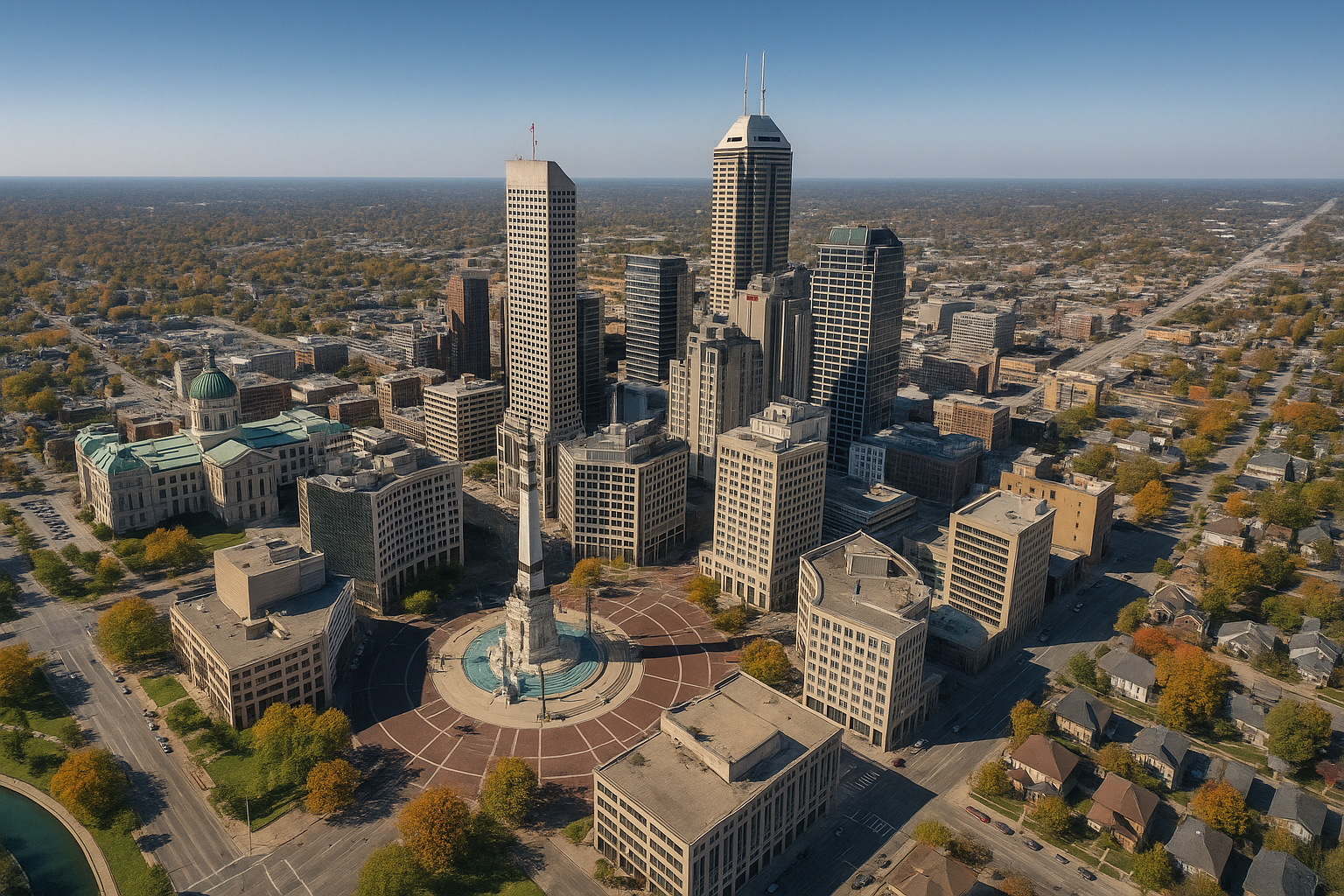
Indianapolis, Indiana
887,642 residents · U.S. Census Bureau, 2020
Indiana’s capital, and the one place on this list where the real question is not which subdivision but whether you want a city neighbourhood at all.
The guide walks both sides: Mass Ave, Fountain Square, Broad Ripple and Irvington against the township suburbs, plus how Unigov and eleven school districts change what an address means.
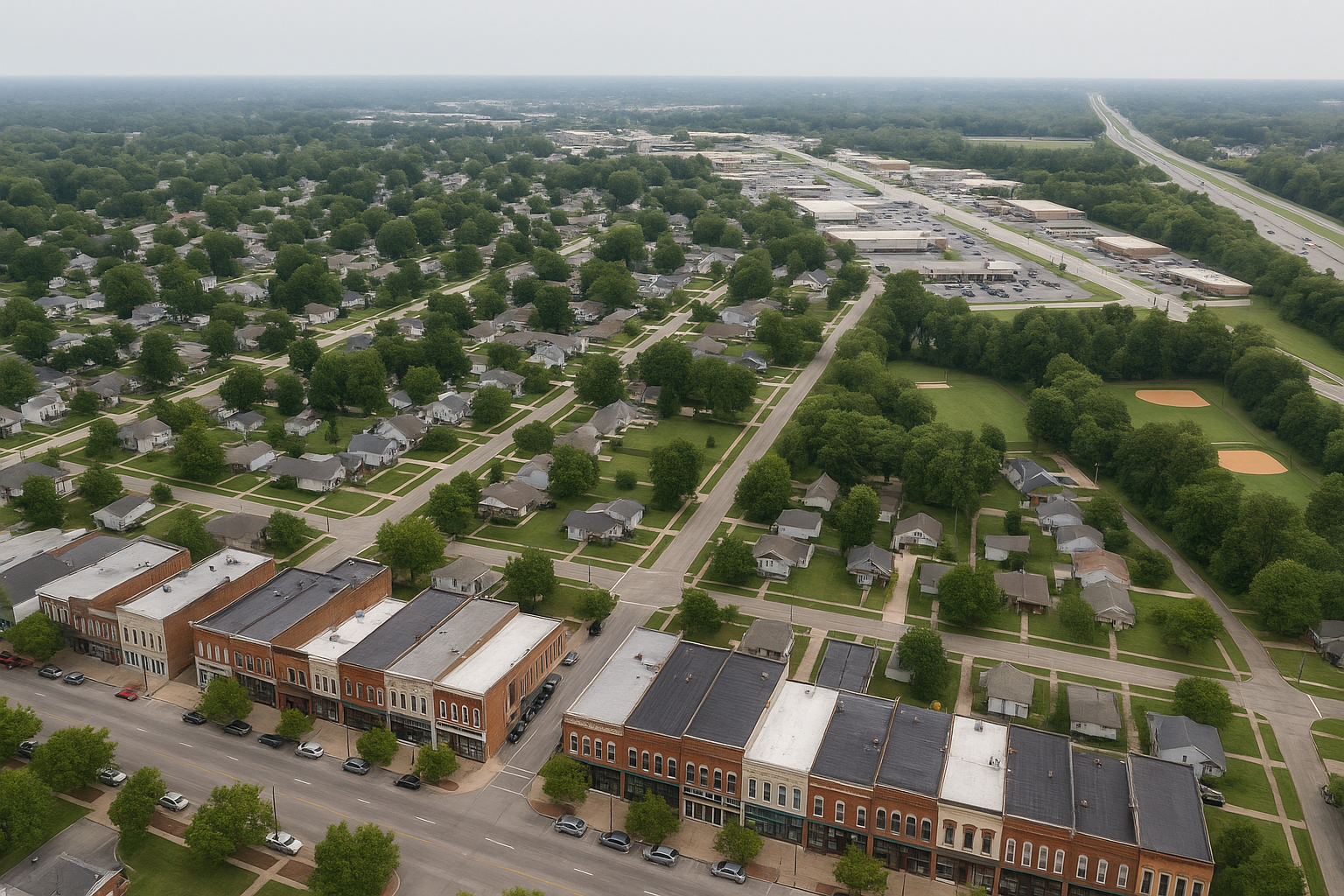
Greenwood, Indiana
63,830 residents · U.S. Census Bureau, 2020
The south-metro anchor on I-65, and the one Johnson County address in the service area.
Three school corporations split the city map, which is the single most misunderstood thing about buying here.
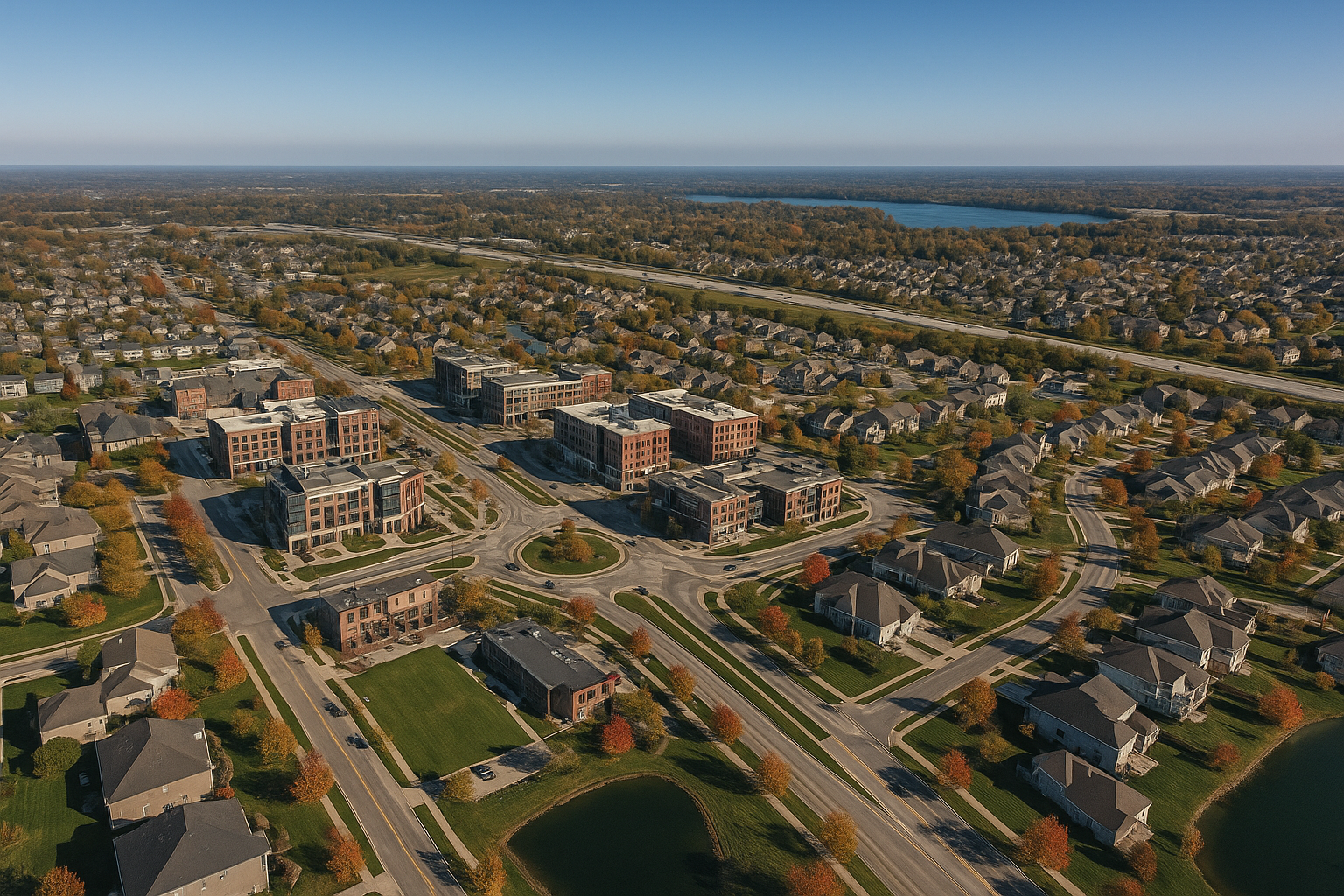
Fishers, Indiana
98,977 residents · U.S. Census Bureau, 2020
Sixteen miles from downtown on the I-69 corridor, with two separate dining districts and homebuilding still running.
The guide covers the Nickel Plate District against Geist, what the commute really costs at peak, and which neighbourhoods are still adding inventory.
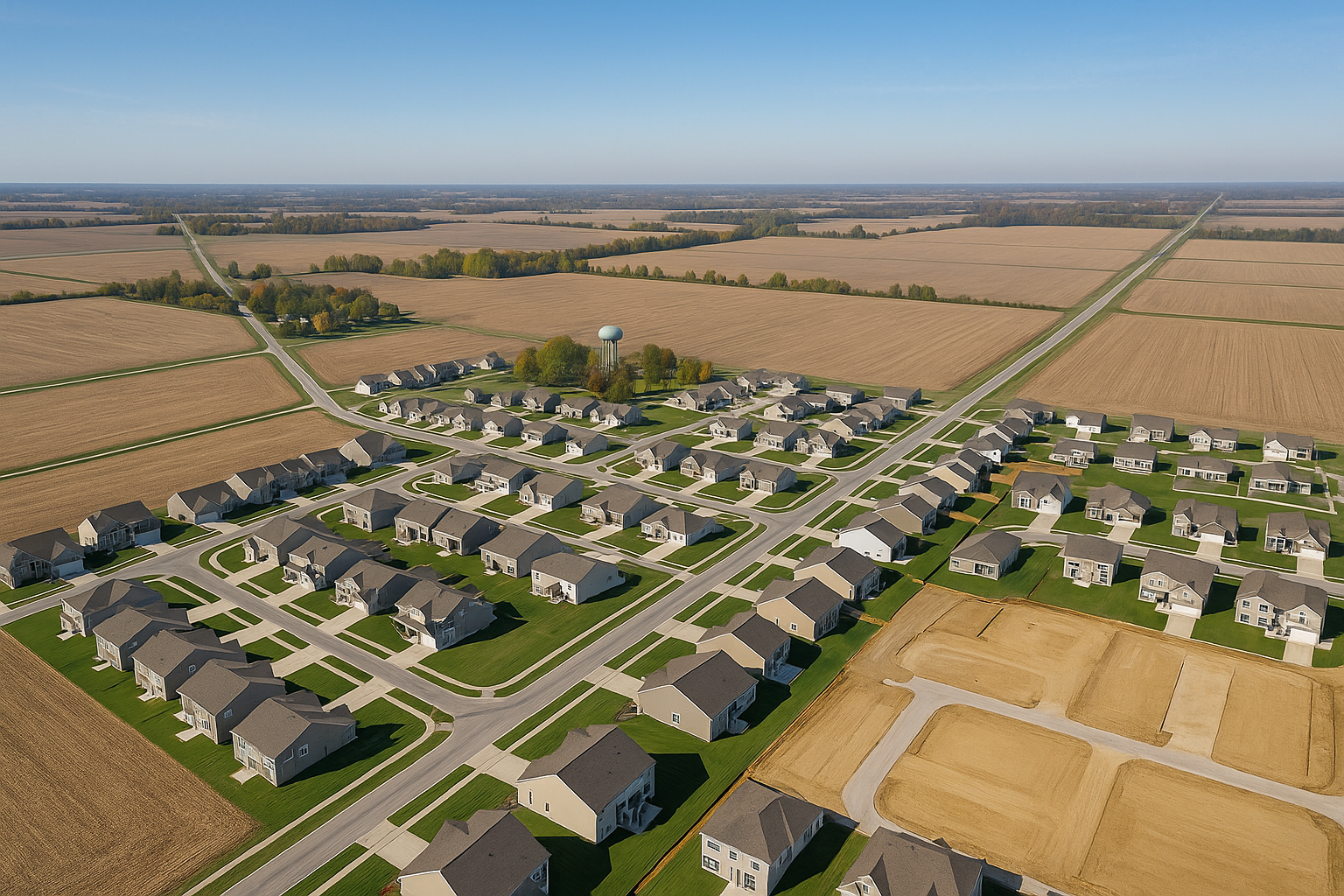
McCordsville, Indiana
8,503 residents · U.S. Census Bureau, 2020
The north-east growth edge where Hancock County meets the Geist side, at the head of the Mt. Comfort corridor.
Small on paper and changing faster than any other town here, which makes recent comparable sales matter more than the population figure.
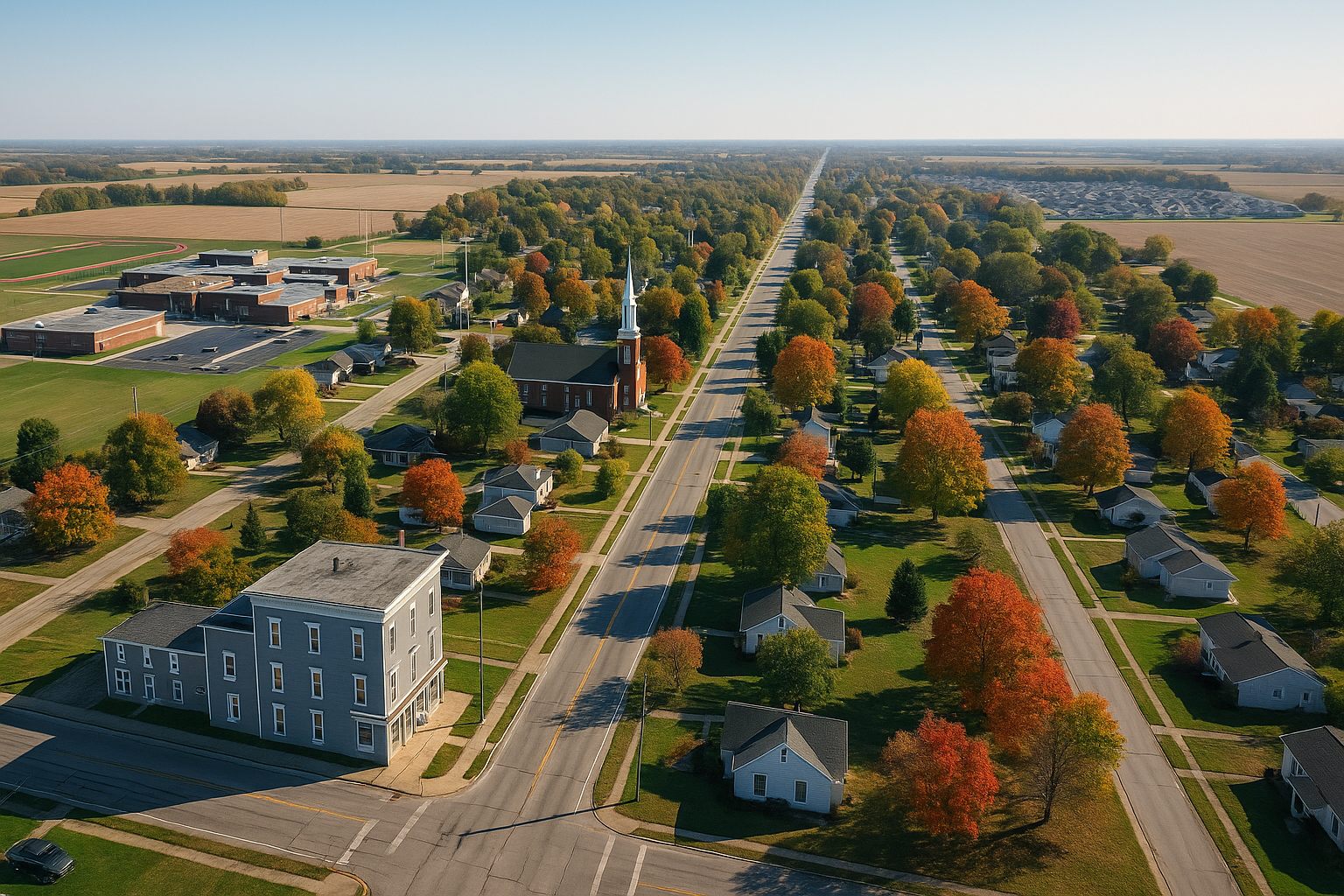
New Palestine, Indiana
2,744 residents · U.S. Census Bureau, 2020
Twenty miles from downtown on the US-52 corridor, ringed by active homebuilding.
This is where Jim lives and works, and it is the most granular guide on the site: subdivision by subdivision, builder by builder, with the school corporation that drives most of the demand.
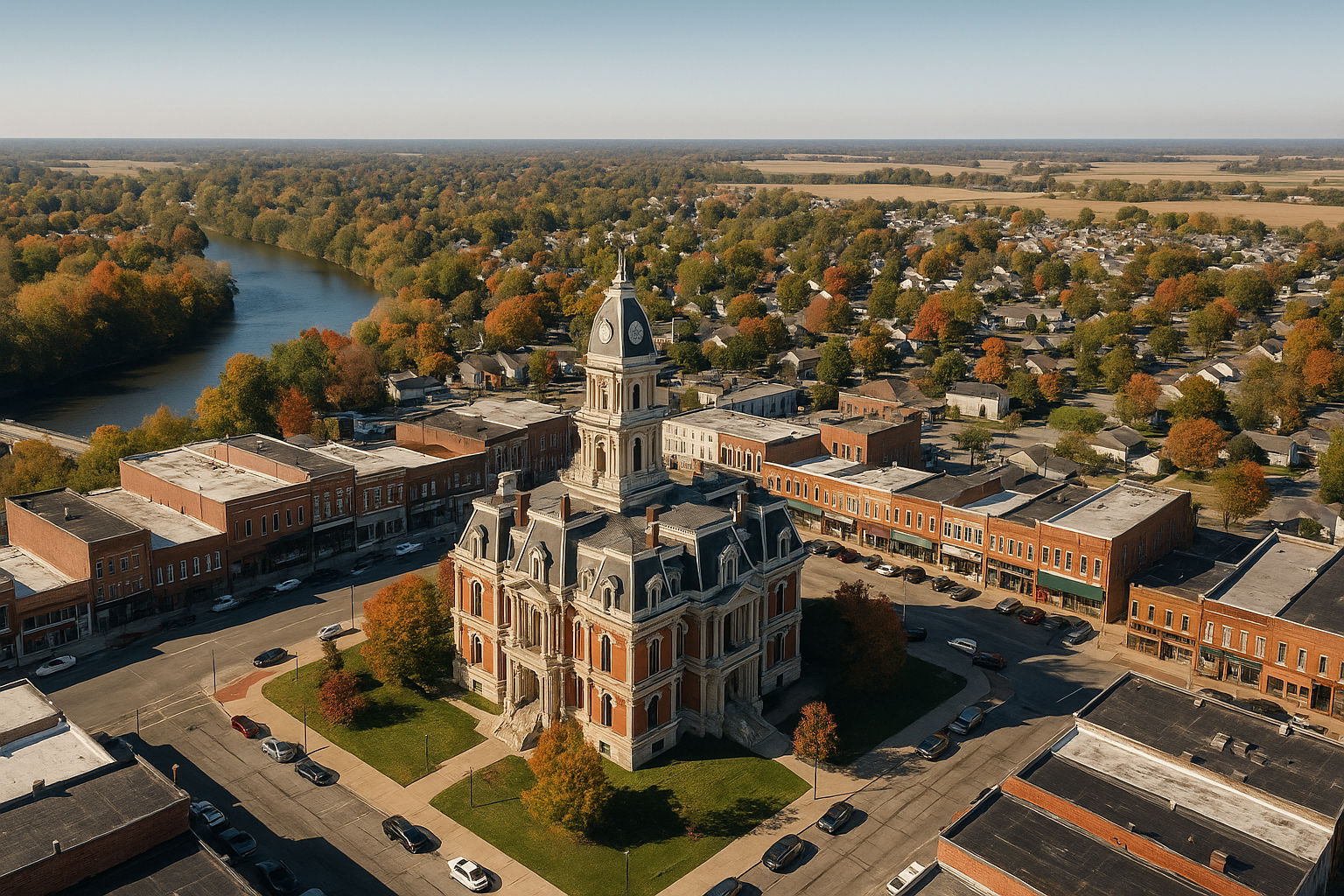
Noblesville, Indiana
69,604 residents · U.S. Census Bureau, 2020
The county seat since 1824, built around an 1879 courthouse square, with Morse Reservoir on its west side.
The guide is organised around the split that matters here: the historic square and the reservoir on one side, the newer building on the east, and the SR-37 commute that connects them.
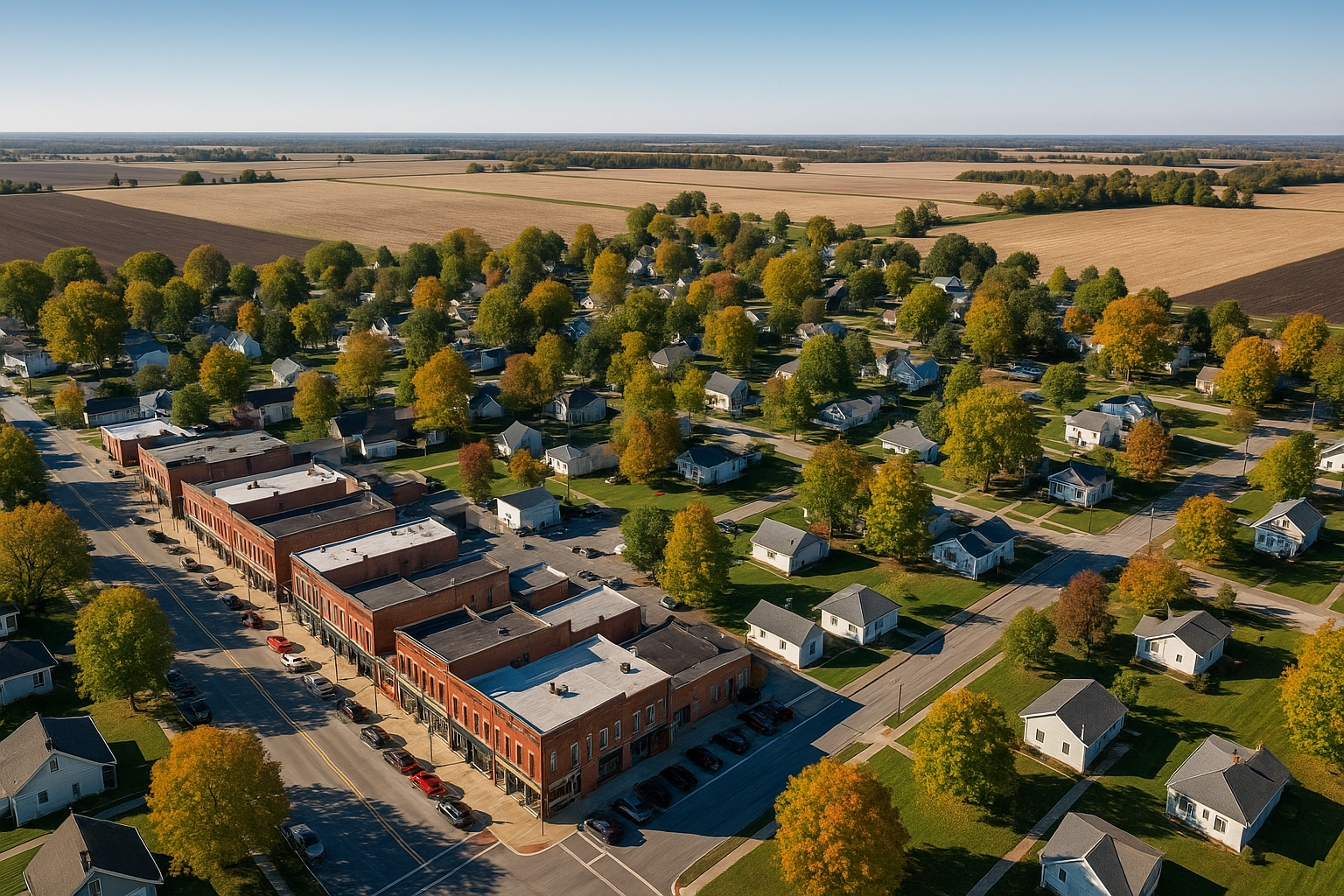
Fortville, Indiana
4,784 residents · U.S. Census Bureau, 2020
A small historic main street with new building pressing in around it, about 25 miles north-east of downtown.
It shares the Mt. Vernon corporation with McCordsville, so the two are natural comparables for the same buyer.
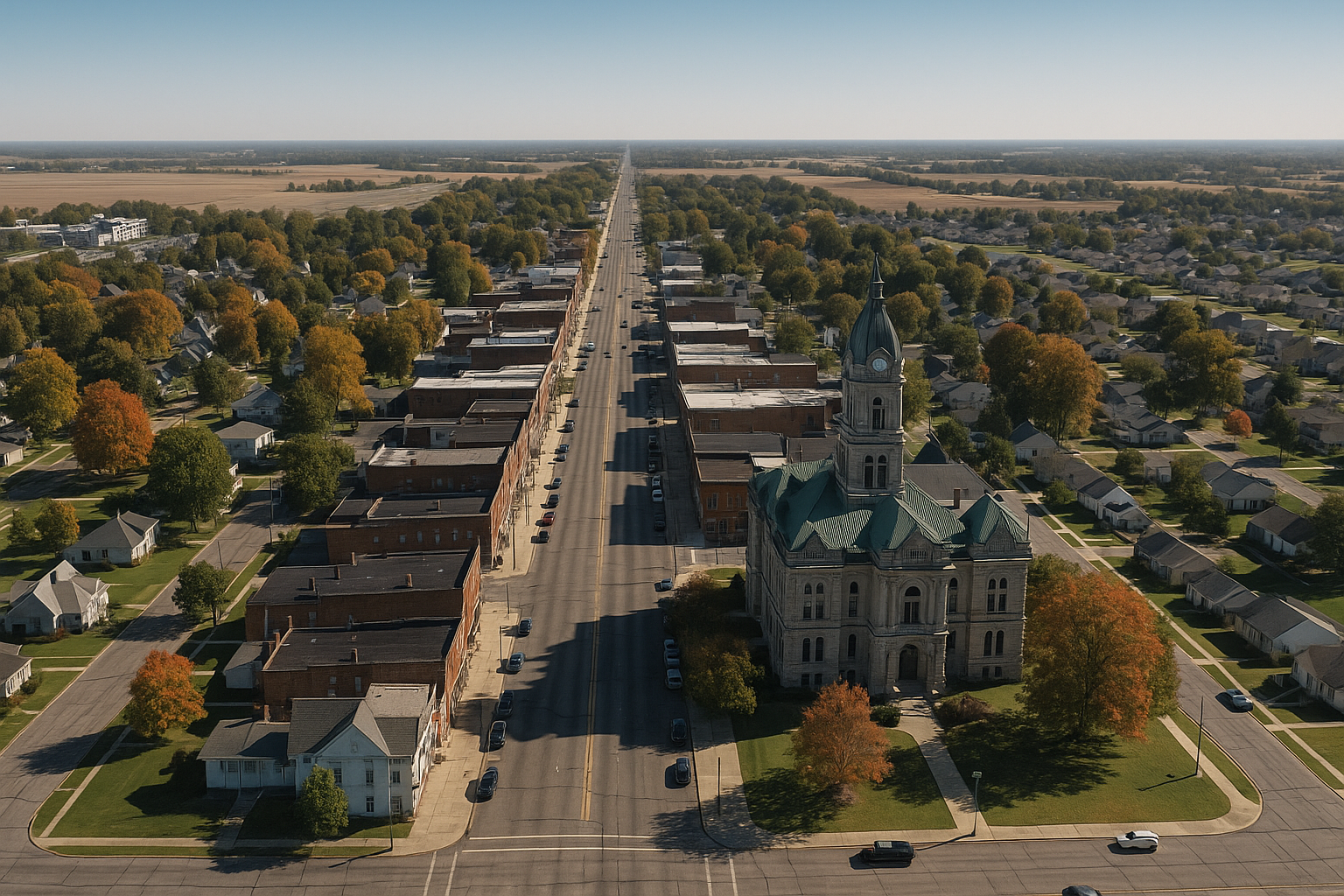
Greenfield, Indiana
23,488 residents · U.S. Census Bureau, 2020
The Hancock County seat, where the historic National Road crosses State Road 9 about 25 road miles east of downtown.
The guide covers the county-seat core, the newer building on the town’s edges, and what the eastward commute looks like day to day.
Westfield, Indiana
46,410 residents · U.S. Census Bureau, 2020
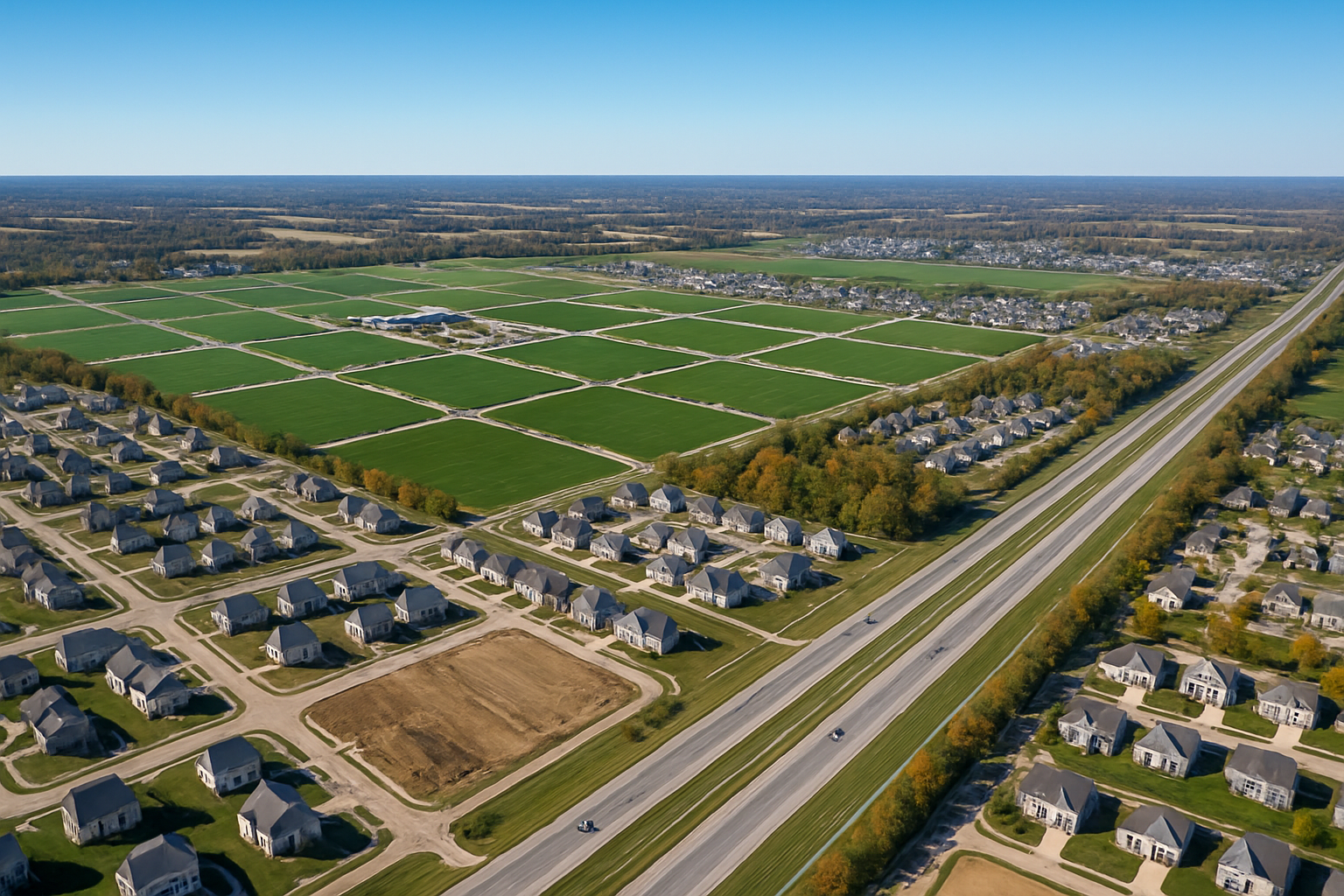
Grand Park and the fastest-changing corner of Hamilton County, built around the rebuilt US 31 corridor on an 1834 Quaker founding.
One of the heaviest new-construction markets in the metro, which changes how you read a median.
Several of these sit along the Mt. Comfort corridor, which runs just over thirteen miles from McCordsville in the north to New Palestine in the south (Urban Land Institute advisory panel report, 2019). If you are buying in that part of Hancock County, it is worth reading before you tour.
Three questions that narrow nine towns to two
Buyers who arrive with these three answered tend to find a house in weeks. Buyers who arrive without them tend to tour for months across an area too wide to hold in your head.
1. Where does the commute start and end?
Not the mileage — the drive, at the hour you would make it. Central Indiana commutes are corridor-dependent, and I-69, SR-37, US-52 and I-65 behave very differently at peak than they do at ten in the morning. Drive the two you are choosing between before you rank them.
2. What do you need from schools?
School corporation boundaries do not follow town borders, and inside Marion County they do not follow anything intuitive at all. Decide whether schools are a hard filter or a preference before you look at houses, because that single answer removes or restores whole towns.
3. New construction, resale, or open to both?
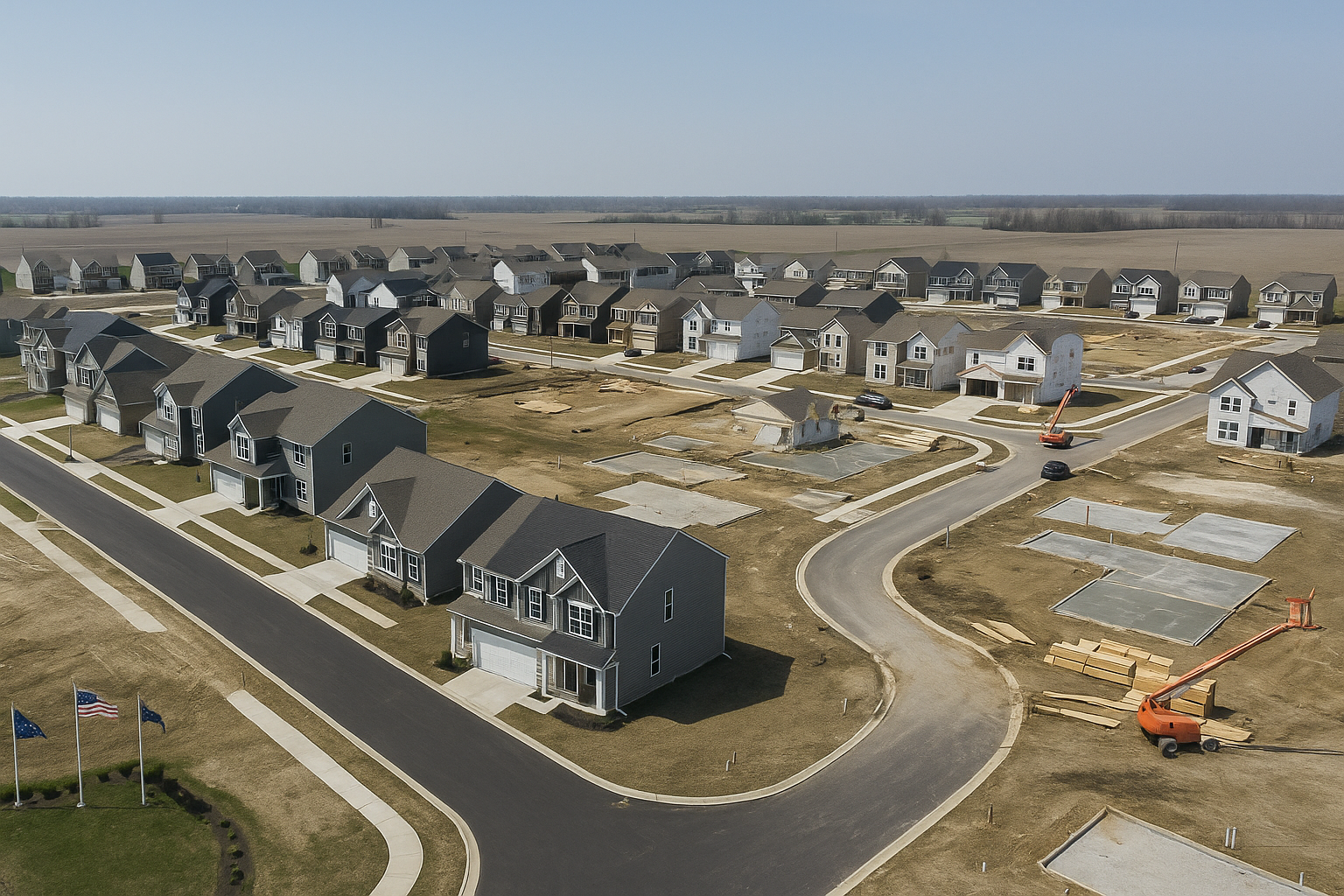
This changes the map more than price does. Hamilton County has the most new building at scale; Hancock County has more of it per dollar. And if you are considering new, the builder's incentive is worth reading closely before it decides anything for you — the new-construction guide walks through what those incentives cost once they are priced into the base.
Four counties, nine towns
I live in New Palestine and I work across four counties, which means I spend a lot of my week driving between towns that get lumped together on the internet and are nothing alike in person. Fishers and Fortville are both “Indianapolis suburbs” on a list. They are not the same decision.
The four counties are the real division. Marion is the city itself. Hamilton sits north, where Fishers, Noblesville and Westfield are. Hancock sits east along the Mt. Comfort corridor, where McCordsville, Fortville, Greenfield and New Palestine sit. Johnson sits south, where Greenwood is. Which county you land in tends to settle your commute, your tax rate and your school corporation before you have looked at a single house.
If you want the shortcut, call me and describe the three answers. I can usually narrow nine towns to two on the phone, and that conversation carries no obligation.
Questions buyers ask before they pick a town
What areas does Jim Bardes serve in Central Indiana?
Nine communities across four counties: Indianapolis in Marion County; Fishers, Noblesville and Westfield in Hamilton County; New Palestine, Greenfield, McCordsville and Fortville in Hancock County; and Greenwood in Johnson County. All nine have a full written community guide, its own live listings page and its own market report.
Which Indianapolis suburb should I choose?
It depends on three things, in this order: where you commute, what you want from schools, and whether you are buying new construction or resale. Hamilton County to the north tends to cost more and offer more new building at scale. Hancock County to the east tends to cost less per square foot and run smaller and quieter. Johnson County to the south sits closest to the I-65 corridor. Each guide on this page answers those three questions for its own town rather than ranking towns against each other.
Do you cover Indianapolis itself, or only the suburbs?
Both. The Indianapolis guide is the largest on the site, and it treats the city as a real option rather than a place you pass through on the way to a subdivision. It covers the cultural-district neighbourhoods, how Unigov works, and what the eleven school districts inside Marion County mean for an address.
What is inside each community guide?
The same structure every time: neighbourhood settings and what they cost, home types and builders, schools, dining and daily errands, commute data, a section on what the town does not do well, an agent's take, and a FAQ. Every figure is attributed to a named source with a date, so you can check it.
Is Central Indiana or Greater Indianapolis the right term?
Central Indiana is the term used on this site, because it is what people here say and because the service area reaches into four counties rather than tracking a single metropolitan boundary. Greater Indianapolis means much the same thing in practice.
Not sure which town yet?
Tell me where you commute, what you need from schools, and whether you are open to new construction. That is usually enough to narrow it down.
Jim Bardes · Green Tree Realty Solutions Inc. · Equal Housing Opportunity. Information is deemed reliable but not guaranteed and should be independently verified.

WORK WITH US

BUYER SERVICES
We're here to help you find the home of your dreams. With a team of experts guiding you every step of the way, our extensive knowledge and experience will ensure you have the best home buying experience possible.

SELLER SERVICES
We take the stress out of selling your home by providing a seamless experience from start to finish. Our team will put you in the best position to market your home and sell it for the highest possible price.
Indiana Living & Lifestyle
First-Time Home Buyer Programs in Indiana: What Applies
Buyer Education · Central Indiana First-Time Home Buyer Programs in Indiana: What Applies Search for first time home buyer programs in Indiana and you will find national listicles, retired program names, and grants that never existed here. This page holds only what I can point to on an official sour

Best Suburbs of Indianapolis: A Local Agent's Guide
Central Indiana · Buyer Orientation Best Suburbs of Indianapolis: A Local Agent's Guide Every ranked list of Indianapolis suburbs hides the same problem: the criteria belong to the writer instead of to you. After more than twenty years in central Indiana real estate, I sort suburbs by fit. Here are
New Home Builder and Financing Incentives in Central Indiana Explained
New Construction · Central Indiana New Home Builder and Financing Incentives in Central Indiana Explained Walk any model home corridor from Fishers to Bargersville and the offers find you before the floor plans do. A lower rate for two years. Thousands toward closing. A finished home priced below it
GET MORE INFORMATION